Programming Mastery Journey
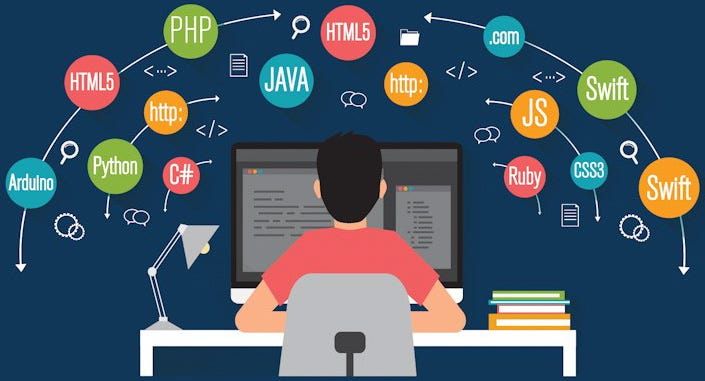
"I am currently a Software Engineering student at ALX. I'm passionate about technology and enjoy conducting research to find answers on my own. I have a natural inclination to ask 'WHY' more often than 'HOW'.
"While working on projects at ALX, I have acquired a wealth of interesting and diverse knowledge about software engineering and computer science in general. Therefore, I needed a place to store and save all this information, allowing me to refer back to it whenever I forget."
How to learn and know programming like it was your mother tongue language
Learning programming like a mother tongue language requires dedication, practice, and a systematic approach. Here are some steps you can follow to enhance your programming skills:
Start with a High-Level Language: Choose a high-level programming language like Python, JavaScript, or Java as your first language. These languages have user-friendly syntax and extensive resources for beginners.
Learn the Basics: Begin with the fundamentals of programming, such as variables, data types, control structures (if statements, loops), functions, and basic input/output operations. Online tutorials, video courses, and interactive coding platforms like Codecademy or FreeCodeCamp can be helpful resources.
Practice, Practice, Practice: Consistent practice is crucial for mastering programming. Solve coding exercises, challenges, and projects to reinforce your understanding. Platforms like LeetCode, HackerRank, or Project Euler offer a wide range of coding problems to tackle.
Build Projects: Apply your knowledge by building projects. Start with small, manageable projects and gradually increase their complexity. Projects allow you to gain hands-on experience and reinforce your understanding of programming concepts.
Read and Analyze Code: Expose yourself to existing code written by experienced programmers. Analyze how they structure their code, use different programming constructs, and solve problems. Open-source projects on platforms like GitHub provide an abundance of code to explore.
Collaborate and Seek Feedback: Engage in programming communities and forums to collaborate with other learners and experienced developers. Sharing your code and seeking feedback will help you improve and learn from others' expertise.
Read Documentation and Books: Learn to navigate programming documentation and reference materials. The official documentation of your chosen language is an excellent resource for understanding the language in depth. Books on programming concepts and design patterns can also provide valuable insights.
Embrace the Mindset: Approach programming with curiosity, patience, and a problem-solving mindset. Think analytically and break complex problems into smaller, manageable tasks. Develop the ability to debug and troubleshoot code effectively.
Stay Updated: Technology evolves rapidly, so staying up to date with programming languages, frameworks, and tools is crucial. Follow reputable programming blogs, watch online tutorials, attend webinars or conferences, and explore new libraries or frameworks.
Teach and Share: Teaching others what you've learned is an excellent way to reinforce your understanding. Engage in coding communities, participate in coding forums, or start your programming blog to share your knowledge and help others.
Remember, learning programming is a continuous journey. Be persistent, embrace challenges, and keep coding regularly to improve your skills over time.
Remembering all you have learned
Forgetting what you have learned can be frustrating, but it's a common challenge faced by many learners. Here are some strategies to help you retain programming knowledge better:
Practice Regularly: Consistent practice is key to retaining programming knowledge. Set aside dedicated time each day or week for coding exercises and projects. Regular practice helps reinforce concepts and prevents forgetting.
Build Projects: Apply what you've learned by working on projects. Building real-world applications or solving coding challenges helps cement your understanding and creates memorable experiences. Projects also allow you to revisit and reinforce previously learned concepts.
Review and Recap: Set aside time for regular review sessions. Review your notes, code snippets, and projects to refresh your memory. Focus on concepts that you find challenging or tend to forget. Teaching or explaining concepts to someone else can also help solidify your understanding.
Space out Learning: Spacing out your learning sessions over time has been shown to enhance retention. Instead of cramming information in a short period, distribute your learning over multiple sessions. Reviewing concepts periodically reinforces memory and improves long-term retention.
Use Memory Techniques: Employ mnemonic techniques, visualizations, and memory aids to enhance retention. Create associations between new programming concepts and things you are already familiar with. Use diagrams, flowcharts, or mind maps to visualize and connect different programming concepts.
Write Documentation and Comments: When working on projects, document your code and write comments explaining your thought process and the purpose of different sections. This practice not only improves the readability and maintainability of your code but also helps you remember how and why you implemented specific solutions.
Teach Others: Explaining programming concepts to someone else is an effective way to reinforce your own understanding. Offer to help fellow learners or participate in coding communities where you can answer questions or contribute to discussions. Teaching others requires you to recall and explain concepts, solidifying your knowledge.
Stay Engaged: Actively engage with programming communities, forums, and discussion boards. Participate in coding challenges, code reviews, or collaborative projects. Interacting with others helps keep you motivated, exposes you to different perspectives, and reinforces your learning.
Apply Different Learning Techniques: Experiment with various learning techniques that suit your learning style. Some people find video tutorials more effective, while others prefer reading books or working on hands-on projects. Try different approaches and find what works best for you.
Reflect on Mistakes: Analyze and learn from your mistakes. When you encounter errors or bugs, take the time to understand them and identify the underlying cause. Reflecting on your mistakes helps you internalize the correct approach and avoid similar errors in the future.
Learning programming is a continuous process, and forgetting certain details is natural. The key is to develop a strong foundation, engage in regular practice, and use strategies that work best for you to reinforce and retain your knowledge over time.
Programming communities, forums, and discussion boards
Here are some examples of popular programming communities, forums, and discussion boards where you can engage with other programmers, ask questions, and participate in discussions:
Stack Overflow: Stack Overflow is a widely used platform where programmers can ask questions, find answers, and share their knowledge. It covers a wide range of programming languages and frameworks.
GitHub Community: GitHub has a vibrant community where developers can collaborate on open-source projects, share code snippets, and participate in discussions. You can explore repositories, raise issues, and contribute to projects.
Reddit: Reddit hosts numerous programming-related communities, known as subreddits, dedicated to specific programming languages, frameworks, or topics. Some popular subreddits include r/programming, r/learnprogramming, and language-specific subreddits like r/python or r/javascript.
Dev.to: Dev.to is a community-driven platform where developers can write articles, share their experiences, and participate in discussions. It covers a wide range of programming topics, frameworks, and tools.
Hacker News: Hacker News is a community-driven news aggregator that focuses on technology, startups, and programming. It features discussions on various programming-related topics and industry news.
CodeProject: CodeProject is a programming community and resource website where developers can share code samples, articles, tutorials, and participate in discussions. It covers multiple programming languages and technologies.
Quora: Quora is a popular question-and-answer platform where you can find programming-related topics and discussions. Many industry professionals and experts actively participate in answering questions.
Discord Communities: Discord hosts various programming communities and servers where developers can connect, ask questions, and engage in discussions. These communities can be language-specific, topic-specific, or focused on general programming.
Unity Forums: If you're interested in game development using Unity, the Unity Forums provide a platform for developers to ask questions, share knowledge, and discuss Unity-related topics.
LinkedIn Groups: LinkedIn hosts numerous professional groups related to programming and software development. Joining relevant groups allows you to connect with industry professionals, participate in discussions, and seek advice.
Examples and stages of projects you should work on
Here are some examples of project ideas at different stages of complexity that you can work on to enhance your programming skills:
Beginner Level Projects:
To-Do List Application: Build a simple to-do list application that allows users to add, edit, and mark tasks as completed.
Calculator: Create a basic calculator that can perform arithmetic operations like addition, subtraction, multiplication, and division.
Guessing Game: Develop a program that generates a random number and prompts the user to guess it, providing feedback on whether the guess is too high or too low.
Simple Website: Build a basic website with HTML and CSS, incorporating features like navigation, images, and text.
Intermediate Level Projects:
Weather Application: Create a weather application that retrieves weather data from an API and displays it to the user based on their location or a search query.
Blogging Platform: Develop a blogging platform where users can sign up, create blog posts, add comments, and have basic user authentication.
Movie Recommendation System: Build a program that suggests movies to users based on their preferences and previous movie ratings.
E-commerce Store: Create an online store application that allows users to browse products, add items to a shopping cart, and proceed to checkout.
Advanced Level Projects:
Social Media Platform: Develop a social media platform with features like user profiles, posting content, following other users, and implementing a news feed algorithm.
Chat Application: Build a real-time chat application using technologies like WebSocket, allowing users to send and receive messages instantly.
Expense Tracker: Create an expense tracking application that allows users to track their income and expenses, generate reports, and set budget goals.
Machine Learning Model Deployment: Develop a machine learning model, train it on a dataset, and deploy it as a web service using frameworks like Flask or Django.
Remember, the complexity of a project can vary based on your experience and familiarity with different programming concepts. Start with projects that match your skill level, and gradually challenge yourself by tackling more advanced projects as you progress. Additionally, consider your personal interests and choose projects that align with them, as it will keep you motivated throughout the development process.
Flask Projects
Building a portfolio of Flask projects is an excellent way to showcase your backend web development skills and increase your chances of landing a high-paying job. Here are some project ideas, organized into stages of increasing complexity, that will help you become proficient and job-ready in Flask development:
Beginner Level Projects:
Hello Flask: Create a simple Flask app that displays "Hello, World!" on a web page. This project will help you get familiar with the basic structure of a Flask app.
URL Shortener: Build a URL shortener service that takes a long URL as input and generates a shorter, unique URL that redirects to the original link. This project will teach you about routing and handling form data in Flask.
Simple Blog: Develop a basic blogging platform where users can create, read, update, and delete blog posts. This project will introduce you to database integration with Flask using SQLite or SQLAlchemy.
Intermediate Level Projects:
Task Manager: Create a task management application that allows users to create tasks, assign them due dates, mark them as complete, and categorize them. Implement user authentication and authorization to ensure users can only manage their own tasks.
Bookstore API: Build a RESTful API that handles operations like adding, updating, and deleting books in a bookstore. Utilize Flask-RESTful or Flask-RestPlus to make API development more straightforward.
Image Gallery: Develop an image gallery application where users can upload, view, and organize images. Implement image processing and storage using libraries like Pillow and Amazon S3.
Advanced Level Projects:
E-commerce Website: Create a fully functional e-commerce website with features like user authentication, product listings, shopping cart, checkout process, and payment integration using platforms like Stripe or PayPal.
Social Media Platform: Build a social media platform where users can create profiles, connect with other users, post updates, and interact through comments and likes. Implement real-time updates using WebSocket technology.
Blogging CMS: Develop a content management system (CMS) for blogging that enables users to create and manage blog posts, apply custom themes, and schedule posts for publication.
Extra Challenge:
- Microservices Architecture: Build a complex web application using a microservices architecture with Flask as the underlying framework for each service. Containerize the services using Docker and orchestrate them using Kubernetes.
Remember, the key to becoming proficient and job-ready is not just building projects but understanding the concepts, design patterns, and best practices involved in backend web development. Focus on writing clean, maintainable, and scalable code, and explore additional technologies like databases, cloud services, and deployment tools.
To make your projects stand out to potential employers, ensure you document your work well, write unit tests, and deploy your applications to real servers or cloud platforms like AWS, Azure, or Heroku. Having a diverse portfolio that showcases your ability to build various types of web applications will make you an attractive candidate for high-paying backend web development roles.
Few Companies that utilize Flask
Many companies have adopted Python with Flask for building web applications and APIs due to its simplicity, flexibility, and extensive community support. Since the technology landscape is constantly evolving, it's likely that even more companies have embraced Flask. Here are some well-known companies that have used Python with Flask in the past:
Pinterest: Pinterest, a popular social media platform that allows users to discover and save ideas, reportedly uses Flask in some of its backend services.
LinkedIn: LinkedIn, the professional networking platform, has utilized Flask in certain components of its infrastructure.
Twilio: Twilio, a cloud communications platform, has integrated Flask in parts of its API and web application.
Netflix: Netflix, the streaming giant, has incorporated Python and Flask for certain backend services and tools.
Reddit: Reddit, the social news aggregation platform, has used Flask in some of its web application components.
Lyft: Lyft, the ride-sharing service, has employed Flask in certain backend applications and services.
Mozilla: Mozilla, the open-source web browser developer, has used Flask for various internal projects and services.
Uber: Uber, the ride-hailing platform, has integrated Flask into its backend architecture for specific services.
Airbnb: Airbnb, the online marketplace for lodging and travel experiences, has used Flask for certain web application functionalities.
Dropbox: Dropbox, the cloud storage and file synchronization service, has employed Flask for specific internal tools and services.


